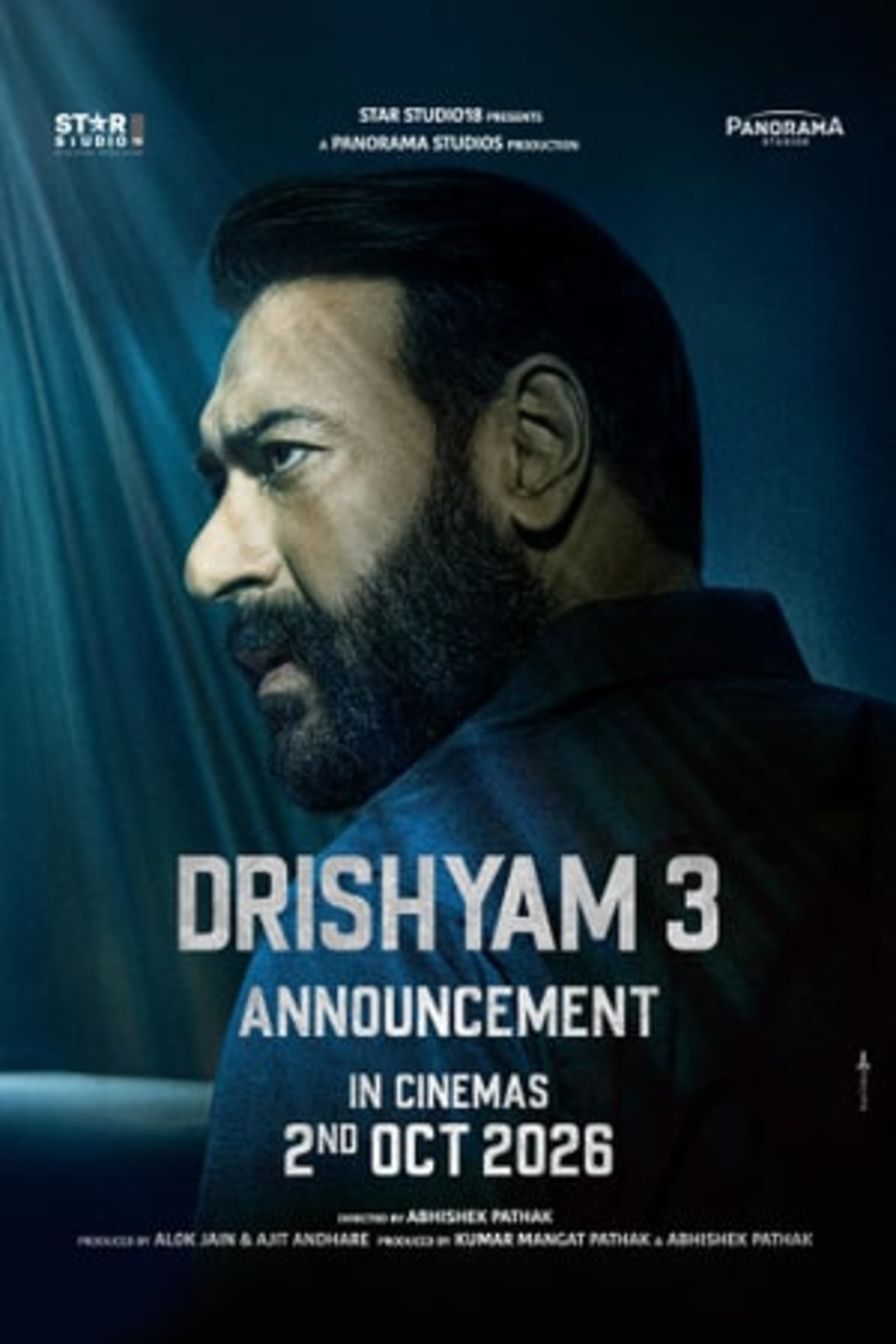
Drishyam: The Conclusion
Drishyam: The Conclusion brings Vijay Salgaonkar back for one final battle. Ajay Devgn is brilliant in a gripping, satisfying and thoroughly entertaining finale that gives the Drishyam trilogy the ending it deserves.
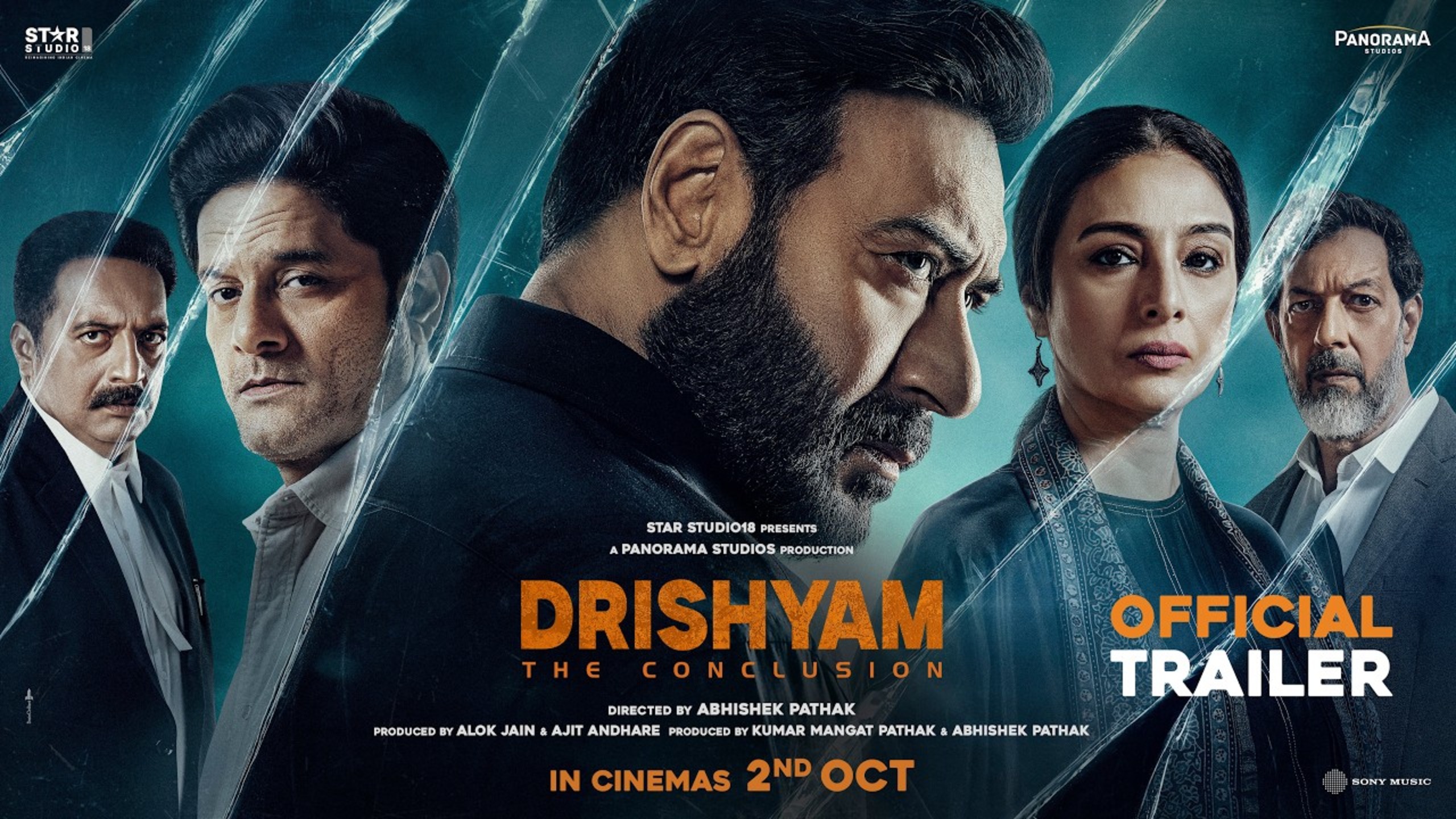
Drishyam: The Conclusion — Review
Vijay Salgaonkar gets the ending he deserves — a gripping, satisfying and thoroughly entertaining final chapter that brings the Drishyam trilogy to a close. Some film characters become memorable. Some become iconic. And then there are characters who become so deeply associated with an actor that it becomes difficult to imagine anybody else playing them.
For me, Vijay Salgaonkar is firmly in that last category. And after watching Drishyam: The Conclusion, I can say this with absolutely no hesitation: This is the ending I wanted for the Drishyam trilogy. I genuinely loved this movie. I enjoyed it from beginning to end. And, perhaps most importantly for a film like this, I don’t remember experiencing a single dull moment.
For a two-and-a-half-hour mystery thriller that has to carry the weight of two hugely popular predecessors, that’s quite an achievement.
The Third Time Is the Charm
The biggest challenge with Drishyam: The Conclusion was never going to be whether it could produce another twist. We’ve already seen Vijay Salgaonkar manipulate timelines, create alibis, exploit loopholes and stay several steps ahead of the investigation. The real challenge was much harder: How do you end Vijay’s story without destroying everything that came before it?
And this is where I think the film gets it right. The movie doesn’t simply throw another random mystery at Vijay and ask him to solve it. Instead, it understands the history of this family. The consequences of what happened. The people who haven’t forgotten. The investigators who still have questions.
And most importantly, the psychological burden that comes with living for years knowing that one secret could destroy everything. That gives the third film a genuine reason to exist.
Ajay Devgn Is Brilliant
Let’s get this out of the way. Ajay Devgn is brilliant. There is a reason Vijay Salgaonkar works so well in his hands. Devgn doesn’t need to constantly raise his voice or deliver dramatic monologues. A lot of Vijay’s character exists in his eyes. A pause. A glance. A slight change in expression.
The way he listens. The way he calculates. The way he looks at his family. And the way he looks at somebody who might have figured him out. That’s where Ajay Devgn is exceptional here. He understands that Vijay’s greatest weapon isn’t physical strength. It’s his mind. And Devgn plays him with exactly the right mixture of confidence, fear, exhaustion and determination.
There are moments where you can almost see Vijay calculating his next move without him saying a word. That is incredibly difficult to pull off. And Devgn makes it look effortless.
Vijay Salgaonkar Finally Gets the Finale He Deserves
One thing I particularly appreciated is that the film understands that Vijay isn’t a superhero. He’s a man who has spent years protecting his family. Every decision has consequences. Every lie creates another lie. Every solution creates another potential problem. And eventually, even the best-laid plan can begin to collapse.
That’s what gives the story its tension. You aren’t simply wondering: “What is Vijay going to do?” You’re also wondering: “How much longer can he keep doing this?” That makes the final chapter feel considerably more personal.
The Suspense Never Lets Go
This was probably my biggest takeaway from the movie. There is almost always something happening. The film doesn’t spend huge stretches explaining things that we already understand. It keeps moving. A new clue appears. A character says something suspicious. An old connection becomes relevant. A seemingly insignificant detail suddenly matters.
And just when you think you understand where the film is heading, the story gives you another reason to question your assumptions. That is exactly what I wanted from Drishyam 3. The franchise has always been about details. And this film continues that tradition. You have to pay attention. Not because the movie is trying to confuse you for the sake of confusing you, but because seemingly small pieces of information can become important later.
Abhishek Pathak Knows What This Franchise Needs
Abhishek Pathak returns as director after Drishyam 2, but this time the responsibility is considerably greater. The first two Hindi films had the advantage of adapting stories that had already been successfully established in Malayalam cinema. This time, the Hindi franchise needed its own conclusion.
That’s a completely different challenge. And I think Pathak handles that responsibility well. The third film isn’t simply trying to reproduce the structure of the earlier movies. It takes the characters forward. It expands the mystery. And, most importantly, it actually attempts to finish the story.
That sense of finality matters. Because when a movie calls itself The Conclusion, it needs to feel like one. And this one does.
Jaideep Ahlawat Is Good — But I Wanted More From His Character
This is probably the one area where my opinion differs slightly from some of the reactions I’ve seen. Jaideep Ahlawat absolutely does his part. He’s a terrific performer and he brings the required authority and intensity to Rajveer Singh Tomar. There are scenes where his presence immediately raises the tension.
He feels like somebody who isn’t going to be easily manipulated. And that’s important when you’re putting another investigator opposite Vijay Salgaonkar. But personally, I didn’t feel that the character was essential enough to the overall story to justify quite as much of the attention surrounding him.
I kept thinking: “This is Jaideep Ahlawat. Surely there’s going to be something even bigger coming from this character.” And while the character certainly contributes to the conflict, I didn’t feel the same need for his existence that I felt for the central Vijay-Meera conflict. That’s not a criticism of Ahlawat’s performance.
Quite the opposite. He does exactly what is required of him. My issue is more with the character’s narrative necessity. I simply wanted the film to give him an even stronger reason to be there.
Tabu Continues to Be a Fantastic Counterweight
If Vijay Salgaonkar represents calculation, Meera Deshmukh represents obsession. And Tabu understands that character beautifully. The relationship between Vijay and Meera remains one of the strongest elements of this franchise because neither character is completely simple. Meera isn’t simply “the police officer trying to catch Vijay.”
She’s a mother who has lived with loss. She’s someone who has spent years carrying the consequences of what happened. And Tabu brings that emotional history into her performance. Her presence gives the film a much-needed emotional counterbalance to Vijay’s controlled exterior.
The Family Still Matters
One of the reasons Drishyam became so popular in the first place was that the central crime wasn’t simply about escaping the law. It was about protecting a family. That remains important here. Vijay’s actions aren’t driven by greed. They aren’t driven by power. They’re driven by the desire to protect the people he loves.
That moral ambiguity is what has always made the franchise interesting. You know what Vijay did. You know why he did it. And yet you still find yourself hoping that he can protect his family. That’s a fascinating position for a thriller to put its audience in.
The Screenplay Understands the Audience
After two films, the audience knows Vijay. We know how he thinks. We know that cinema is important to him. We know that details matter. We know that he likes to plan ahead. So the screenplay can’t simply repeat the same trick. And thankfully, it doesn’t feel like a carbon copy. The film plays with our expectations precisely because we think we know how Vijay operates.
That makes certain moments especially satisfying. You start thinking: “Okay, I know what’s happening here.” And then the movie makes you reconsider. That is the fun of Drishyam.
The Climax
I’m deliberately not going to spoil the climax here. And trust me, you don’t want to know. What I will say is that the ending worked extremely well for me. In fact, I think the ending is one of the biggest reasons this movie works as a trilogy finale. It doesn’t simply stop. It concludes. There is a difference.
A lot of franchise films leave the door open because they want another sequel. Drishyam: The Conclusion doesn’t feel desperate to do that. Instead, it gives Vijay’s story a proper destination. And when the final pieces come together, there is a genuine sense of: “Okay. This is where this story needed to end.”
That’s incredibly satisfying.
And Yes — I Preferred This to the Mohanlal Version
I’m going to be very clear here because this is my personal review. I preferred this Hindi version considerably over the Mohanlal version. And I say that with respect to the Malayalam Drishyam films and Mohanlal’s performance. The Hindi franchise has now developed its own identity, and Drishyam: The Conclusion benefits from that.
The pacing worked better for me. The emotional beats landed better for me. The performances connected with me more strongly. And most importantly, the conclusion felt more satisfying to me. This isn’t simply a Hindi remake of another film. It’s the conclusion of this particular version of Vijay Salgaonkar’s story.
And I think it works.
The Technical Side
The film looks suitably dark and atmospheric without becoming visually monotonous. The cinematography by Sudhir Kumar Chaudhary maintains the visual identity of the franchise while giving the third chapter its own polished look. The editing by Sandeep Francis deserves credit too. A thriller like this can easily become bloated.
At 150 minutes, there is plenty of room for the story to slow down. But for me, that never became a major problem. The film keeps giving you another reason to stay invested. The background score by Amar Mohile also does a lot of work in maintaining tension, while the music team of Ravi Basrur, Rochak Kohli and Karma contributes to the film’s overall soundscape.
Is It Perfect?
No movie is. There are definitely moments where I could have wanted a little more depth from certain supporting characters. And, as mentioned earlier, I wasn’t completely convinced that Jaideep Ahlawat’s character needed to occupy quite as much narrative space as the film gives him. But here’s the thing:
Those issues never stopped me from enjoying the movie. And that’s important. Because when I’m sitting in a theatre watching a thriller and constantly checking whether the story is moving, that’s a problem. I never felt that here. I was invested. I wanted to know what happened next. I wanted to see how Vijay would respond.
I wanted to know whether the Salgaonkars could survive this final chapter. And when the ending arrived, I was satisfied.
A Trilogy That Knows When to Stop
This might be my favourite thing about Drishyam: The Conclusion. It knows when to stop. The temptation with a successful franchise is always to leave a tiny door open. Another investigator. Another crime. Another twist. Another sequel. But Vijay Salgaonkar’s story doesn’t need that. Three films are enough.
The first established the crime. The second showed how far Vijay would go to protect his family. And the third finally brings the consequences of all those decisions to a conclusion. That’s a complete journey.
My Final Take
I went into Drishyam: The Conclusion wanting to see one final Vijay Salgaonkar story. I came out genuinely happy with what I watched. I loved this movie. I enjoyed it to the core. There wasn’t a single point where I felt the film had become dull or was simply filling time. The mystery kept me engaged.
The twists kept me guessing. The performances kept me invested. And Ajay Devgn once again proved why Vijay Salgaonkar is such a perfect character for him. His performance is controlled, intelligent and remarkably expressive. Jaideep Ahlawat does his part well, even if I personally didn’t feel his character was as essential as the film seemed to suggest.
Tabu remains excellent. The supporting cast fits comfortably into the world. The direction keeps the tension alive. And the ending… The ending is exactly what a trilogy finale should be. It feels like an ending. Not a cliffhanger. Not an excuse for another sequel. An ending. And that makes the whole journey feel worthwhile.
Final Verdict
Drishyam: The Conclusion is the kind of franchise finale that leaves you feeling satisfied rather than exhausted. It respects what came before without simply repeating it. It gives Vijay Salgaonkar one final puzzle. It gives the audience plenty to think about. And then it closes the book. For me, this is easily one of the most satisfying Hindi thriller conclusions I’ve watched in recent years.
And if you’ve followed Vijay Salgaonkar from Drishyam through Drishyam 2, I genuinely think this is a film you should experience on the big screen. Don’t look up the ending. Don’t read spoilers. Don’t watch reaction videos first. Just watch it. Let Vijay do what Vijay does best. And enjoy the ride.
Final Rating: 5/5
Best for: Crime • Mystery • Thriller • Drama • Suspense • Franchise Fans • Ajay Devgn Fans One-line takeaway:
Vijay Salgaonkar gets the ending he deserves — a gripping, satisfying and thoroughly entertaining final chapter that brings the Drishyam trilogy to a close.
Parental Guidance
CBFC: UA 16+ Runtime: 150 minutes The film contains mature crime-thriller themes, investigation, threats, violence and references to death and suicide. Viewers under 16 should watch with parental/guardian guidance.
Credits
Director: Abhishek Pathak Story: Abhishek Pathak Screenplay: Aamil Keeyan Khan, Abhishek Pathak, Parveez Shaikh Dialogues: Aamil Keeyan Khan Cinematography: Sudhir Kumar Chaudhary Editing: Sandeep Francis Music: Ravi Basrur, Rochak Kohli, Karma Background Score: Amar Mohile
Production Design: Priya Suhass Sound Design: Baylon Fonseca Action Director: R.P. Yadav Production: Panorama Studios, Star Studio18 Release Date: 2 October 2026 Language: Hindi Country: India Runtime: 150 minutes Certification: UA 16+ Rating: 5/5
Keep exploring
More reviews across movies, series, games, products, restaurants and food — all in one place.
Go deeper
More to Explore
Reviews are only part of the conversation. Explore related stories, guides and ideas.
What to Watch After Neagley: 10 Action, Crime & Mystery Series to Watch Next
Finished Neagley? Here are 10 action, crime, mystery and espionage series worth considering next, depending on what you enjoyed about the Reacher spin-off.
Read more →What to Watch After Reacher: 10 Action, Mystery & Thriller Series to Watch Next
Finished Reacher? Here are 10 action, mystery, crime and thriller series to consider next, including Neagley, Bosch, Jack Ryan, Slow Horses and more.
Read more →Aaryan: Cast, Story, Genre & Where to Watch
A factual guide to Aaryan, the Tamil crime thriller about a serial killer's cryptic clues and a police investigation.
Read more →More than a rating
A rating is only the final expression of the review. The real value is in the argument, the context, and whether this is something I would actually recommend spending your time on.
Stay in the loop
Follow Nilaanjan
Get new movie and series reviews, OTT guides, explainers and selected entertainment stories delivered to your inbox.

What do you think?
Share your thoughts, reactions, or perspective. Comments are moderated before they appear publicly.
Leave your thoughts