There was a time when deciding what to watch was wonderfully simple. You checked the cinema listings, waited for a film to arrive on television, borrowed a disc from someone whose taste you trusted, or took a chance on whatever happened to be playing. You had fewer options, and that limitation sometimes made the choice feel like an event.
Today, entertainment is available at almost any hour, on almost any screen. Entire filmographies sit behind a search bar. New series arrive with the regularity of calendar notifications. We have achieved something that once seemed improbable: access to more stories than most of us could watch in several lifetimes.
And yet, an oddly familiar frustration has settled into the modern viewing experience. We open an app, scroll through row after row of recommendations, jump between services, revisit trailers, check another list, and eventually wonder whether there is anything we actually want to watch.
The problem is not a shortage of entertainment. It is the growing distance between having something available and discovering something that matters to us.
Watching should be an experience, not an endless exercise in selecting a thumbnail.
India has won the access game
The scale of India’s streaming audience is extraordinary. Ormax Media’s OTT Audience Report: 2026 estimated that 664.9 million people in India watched online video during the preceding month, while its connected-TV estimate reached 206.9 million. These are industry estimates, but they capture the scale of a profound change: online video is no longer confined to a phone held in one hand during a commute. It has become part of the shared domestic experience.
The business, however, has a more complicated picture. Active subscriptions are not the same as people. One household can have several services; a telecom or television bundle can include multiple platforms. Counting subscriptions tells us something about distribution, but less about how many individuals are willing to pay directly for streaming.
That distinction matters. A huge audience is not automatically a huge paying audience, and reach alone does not guarantee a sustainable business.
The industry’s next phase is therefore less about proving that people will watch online video and more about persuading them that a particular service deserves a place in their lives—and in their monthly budgets.
The catalogue is not the experience
A catalogue is an inventory. A viewing experience is a decision that feels worth making.
Streaming services have become exceptionally good at displaying abundance. Their interfaces can arrange thousands of titles into rows, categories, trending lists and personalised recommendations. But the amount of choice visible on a screen is not the same as the quality of the choice being offered.
A recommendation is useful when it introduces us to something we would not have found ourselves. It becomes less useful when every row repeats familiar names, or when comparing options starts to feel like work.
There is a peculiar pressure in the modern catalogue. A viewer can spend so long looking for the ideal film that the evening’s limited free time starts to disappear. The technology designed to remove friction from entertainment can create a new kind of friction: the effort of choosing.
This is not an argument against algorithms. Good recommendations can be brilliant guides, particularly when they surface films from other languages, overlooked filmmakers, older classics or genres a viewer has never explored. The problem begins when discovery is reduced to prediction—when the system keeps offering what resembles the past instead of opening a door to something new.
Great curation does more than guess what we will click. It gives us a reason to be curious.
The price of having everything
When every service promises a world of entertainment, the viewer still has to decide which worlds are worth paying for.
India’s streaming business is entering a period of greater financial discipline. Industry reporting has described a shift from chasing audience growth towards profitability. Rising content costs, fragmented attention and the limits of subscription-only models are pushing platforms to combine subscriptions with advertising, expand bundling and think harder about retaining viewers.
PwC India’s Global Entertainment & Media Outlook 2026–2030 projects continued growth in India’s wider entertainment and media sector, with digital advertising and OTT among the important areas. Projections are not guarantees, and the economics of individual platforms can differ considerably.
These business questions reach the sofa. A service has to pay for the films and series it offers, find customers and keep them interested. Advertising can reduce the pressure to rely entirely on subscriptions, while bundles can make a service easier to access. Neither model, on its own, guarantees that the programming will be memorable.
For viewers, the calculation is different. A subscription is not worth its price because a platform has thousands of titles. It is worth its price because the viewer finds enough things they genuinely want to watch.
That is a much more demanding promise.
A service might have one extraordinary series that brings people through the door. The harder task is giving them a reason to return when that series ends. If the next recommendation feels irrelevant, the catalogue starts to look less like a treasure chest and more like a warehouse.
The answer cannot simply be to release more. Volume can create visibility, but it can also bury the very work a platform hopes people will discover. Thoughtful commissioning, a recognisable editorial identity and better ways of connecting viewers with stories may prove more valuable than another row of thumbnails.
The living room has changed the stakes
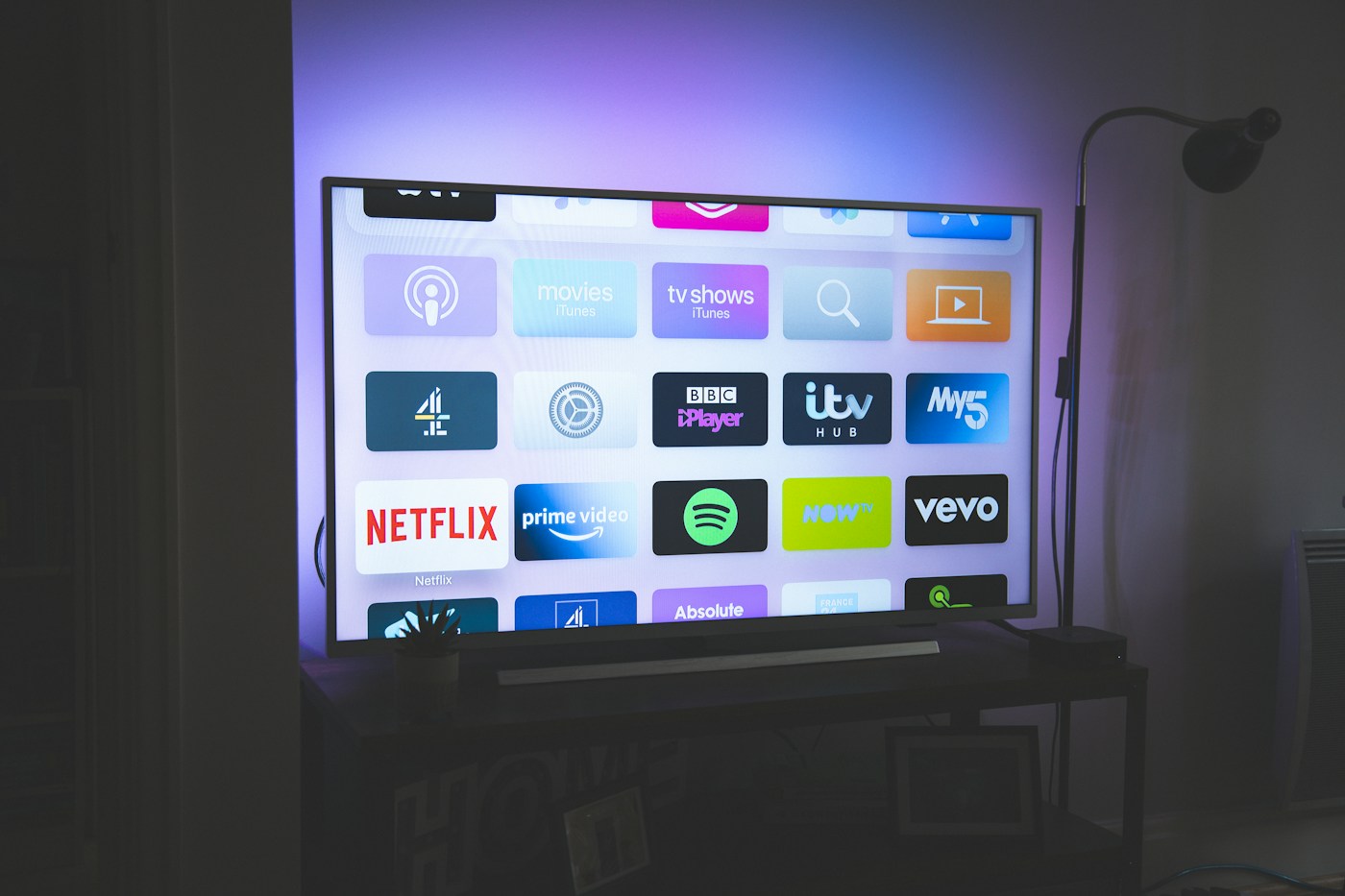
The television has become a gateway to an enormous library. The challenge is making that library feel inviting rather than overwhelming.
A television invites a longer commitment, a shared choice and often a little more ceremony. You may be deciding what to give the next two hours of your evening, not simply filling a spare minute.
Yet the interface often treats this decision as an exercise in endless browsing. A screen designed to make everything accessible can still leave the viewer without a clear starting point.
There is an opportunity here for platforms to think like good editors. A carefully selected collection, a useful explanation of why a title deserves attention, or a recommendation that reflects mood rather than merely genre can turn an intimidating ocean of options into a few inviting possibilities.
This is where editorial judgement still matters. A trusted critic, a thoughtful friend, a festival programmer or a well-made collection can connect a viewer with a film in ways that a popularity ranking cannot always reproduce. Data can reveal patterns. Taste can help us step beyond them.
India needs stories that travel—and stories that stay
A healthy creative industry needs stories that can travel across languages and borders, but it also needs the freedom to make work that is specific, local, surprising and sometimes difficult to categorise. Not every worthwhile film needs to become a franchise. Not every successful series needs to be copied into a dozen variations.
Originality is a long-term asset. A story that stays with an audience can create cultural value well beyond its opening weekend or launch month. It can bring viewers back to a filmmaker’s earlier work, introduce them to a language or region, and build an identity that cannot be replicated simply by increasing output.
For streaming services, that means investing in stories with a reason to exist—not only titles that fit a current trend. For viewers, it means remaining open to work that might not dominate the front page but rewards the time spent with it.
Abundance is useful when it expands the range of stories we can encounter. It is less meaningful when it merely expands the number of things competing for our attention.
What would make streaming feel better?
The solution does not require every platform to become a boutique film club, nor does it mean abandoning popular entertainment. Sometimes the perfect choice is a big, noisy crowd-pleaser. Sometimes it is a slow drama, an old favourite, a documentary or a series that becomes part of a weekly routine. A good viewing life has room for all of it.
But a better streaming experience would begin by respecting the viewer’s time. It would make discovery easier without making the world of entertainment feel smaller. It would distinguish between a title that is trending and one that is genuinely suited to a viewer’s interests. It would give older films and less-publicised stories a chance to be seen.
And it would remember that attention is not an unlimited resource. The viewer is choosing between streaming services, certainly, but also between a film and a book, a series and a conversation, another episode and the decision to call it a night.
Platforms cannot manufacture affection for a story. They can, however, make it easier for people to find one.
The next streaming revolution should be about meaning
India has made remarkable progress in bringing online video to hundreds of millions of people. The business is now confronting more mature questions: how to sustain the economics, retain audiences, reward creative investment and make the next click feel worthwhile.
A platform that helps people discover stories they love has a stronger reason to be remembered. A viewer who feels that a service consistently offers value has a stronger reason to stay. And a creative industry that gives distinctive work room to find an audience has a better chance of building stories that endure.
The future of streaming will still involve technology, pricing, advertising and competition. But the measure of its success should not be the number of tiles on a home screen, or even the number of hours a viewer spends scrolling through them.
It should be whether, at the end of that search, someone finds a story worth giving their time to.
Because the great promise of streaming was never that we would have more things to watch. It was that the right story could be waiting for us, wherever we were.
Sources and further reading
- The Ormax OTT Audience Report: 2026 — audience and connected-TV estimates.
- ETBrandEquity — reporting on streaming business models.
- PwC India: Global Entertainment & Media Outlook — market projections and monetisation trends.
Audience and market figures are estimates and projections from the named sources, not independently audited counts by Nilaanjan.stream.


What do you think?
Share your thoughts, reactions, or perspective. Comments are moderated before they appear publicly.
Leave your thoughts